New Zealand

Saturday, 7 July 2007

Drink driving in New zealand


A nationwide blitz on drink drivers has police renewing calls that the blood-alcohol limit needs lowering.

On Friday night, 26,000 people around New Zealand were stopped and police say the number of positive results shows many are unable to make judgements or drive properly even when they are under the limit.

One driver's reading would have put him over the youth blood-alcohol limit, but because he was 27, he passed.

He was okay to drive under the current adult limit of 80 milligrams of alcohol per 100 mls of blood, but not okay to drive according to the police.

"The current limit is unfortunately so high that people are so drunk that they're too drunk to know that they're too drunk to drive. And that's the sad consequence of the current limit," says Dave Cliff, superintendent national road policing.

Disappointed by the over 200 drunk drivers caught in the nationwide blitz, police say New Zealand country still has a huge problem.

"Given that the weather conditions around the country last night were atrocious we got an extraordinary number of drunk drivers once again," Cliff says.

But there's little chance the government will lower the limits down to the Australian limit of 50 micrograms.

Transport Safety Minister Harry Duynhoven says it's not government policy to lower the blood alcohol level.

"However it is something we have continually on the radar because many other countries have already done so."

Despite advertising campaigns, numbers of prosecutions for drink driving have been on the rise since 2003, with no sign of a reduction in figures to date this year.

"At the current limit, the chances of being involved in a crash are around 30 times that of a sober driver. So the risk is enormous," says Cliff.

New Zealand's limit is the same as the United Kingdom and the United States. But other European countries and Australia all saw lower carnage once they lowered their limits. That is something the New Zealand government looks unlikely to do..

from tvnz.co.nz

Sunday, 1 July 2007

Kiwi will fall sharply by year's end, says bank

Kiwi will fall sharply by year's end, says bank

The Kiwi dollar traded above US77 cents during the weekend, but the global backdrop for the dollar is as "good as it gets" and Deutsche Bank is expecting the dollar to fall sharply to US68c by the end of the year.


Another forecaster, Infometrics, is picking the economy to cool and higher interest rates and lower migration to trip up the housing market, which is expected to drop 3 per cent in the year to March 2009.

The New Zealand dollar was trading just under US77c late on Friday, after official figures showing March quarter economic growth of 1 per cent, with some economists expecting a much slower run in the second half of the year.

The dollar traded slightly above US77c yesterday, still around a 22-year high, and a vast leap above the 10-year average of US56c.

The Kiwi, like many currencies, is also extremely strong against the Japanese yen, trading about 95 yen, compared with a decade average of just 66 yen.

Deutsche Bank is forecasting the dollar will drop back to US72c in September and down to US68c by the end of the year.

from stuff.co.nz

Friday, 29 June 2007

Lack of skilled workers still a problem

Lack of skilled workers still a problem

New Zealand businesses are the most worried in the world about the skills shortage. A report by international business consulting firm Grant Thornton has found that 60 percent of businesses say the lack of skilled workers is one of their biggest restraints. For Australia the figure is 59 percent and South Africa 58 percent. Grant Thornton spokesman Peter Sherwin says economic alarm bells should be ringing, as businesses may have to move overseas to find the skilled staff they need. He says the skills of migrants coming into the country are often not appropriate or not of the same level of those of migrants heading for Northern Hemisphere countries.
© 2006 Newstalk ZB News

Wednesday, 27 June 2007

Bird Flu

Big culls 'unlikely' if bird flu comes to NZ

Major cullings of wild or farmed birds are "highly unlikely" if the deadly bird flu hits New Zealand, says the Department of Conservation (DOC). An exercise called Operation Gallus in Wellington yesterday and today has department staff working on a response plan for the possibility of bird flu reaching New Zealand. DOC biosecurity chief technical officer Geoff Hicks said culling of birds was not included in the plan as DOC considered it to be ineffective and might spread the disease. However, Hicks said New Zealand was at a low risk of getting bird flu.
Source:The Press

Cold in New Zealand

It has been the coldest night of the year so far for many parts of the country. TRN's weather analyst Philip Duncan says clear skies allowed polar air from the weekend's storm to settle and freeze. Timaru and Queenstown were shivering on -6 degrees at 7.30 this morning. West Auckland was 1 degree, Hamilton, Taupo and Blenheim were -3, Wanaka -5, and Lumsden -5. Severe frosts are expected again tonight in many areas, possibly as far north as Rotorua.
© 2006 Newstalk ZB News

Monday, 25 June 2007

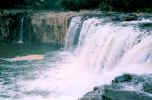
Waterfalls in New Zealand

It's no secret that everyone loves waterfalls. This is evident by their popularity and the amount of tourism dollars spent to support their visitation. They even buoy the economy of some countries around the world. And while many have tried to study why we are so drawn to waterfalls, there's no denying that most of us would bend over backwards to see them.

In New Zealand – a land known for stunning natural beauty – there are many waterfalls to complement its already impressive collection of natural attractions and features. Thanks to its position in the roaring 40s (between 40 and 50 degrees South Latitude), it rains frequently and the wet weather comes from all directions – the Tasman Sea, South Pacific Ocean, or Southern Ocean. The Maori name of the land, Aotearoa, means "land of the long white cloud" so its wet climate did not go unnoticed by the early inhabitants as well. Indeed, waterfalls are bountiful and they provide the perfect excuse to see the country while experiencing its incredible scenic diversity.
New Zealand's waterfalls come in all different shapes and sizes. There are short and stocky ones like the powerful powder-blue Huka Falls and the majestically tall drop-down-the-mountain ones like Sutherland Falls. There are the classically rectangular ones like Marokopa Falls as well as the graceful and elegantly tall ones like the Bridal Veil Falls near Raglan. There are even alluring ones that won't overwhelm you with their height but mesmerize you with their character like the multi-tiered Purakaunui Falls. No matter how you look at them, there is a unique beauty about each waterfall. No two are the same and you could spend a lifetime trying to visit them all.

Geographically sprinkled throughout the country in both North and South Islands, the waterfalls allow you to see the best natural scenery that New Zealand has to offer – both on and off the beaten paths. You'll find them in the subtropical settings of Northland, in coastal locales like the Coromandel Peninsula, or the thermal and volcanic wonderlands of Tongariro National Park. Moreover, you can also find them in mythical fiords like the Milford and Doubtful Sounds, the snowy expanses of the Southern Alps, or even the wind-swept Catlins Forest. And since New Zealand is tailor made for self-driving tours, you can take your pick of which waterfalls to visit and which parts of the country to experience them.

With New Zealand Waterfalls, you are not only making the most of your time immersing yourself in nature, but you're also getting good exercise, learning about the land, and collecting memories you will cherish for the rest of your life. So no matter how you look at it, there's no reason not to visit the country's waterfalls. After all, they're 100% pure Kiwi bliss!

By: Johnny T. Cheng

Johnny T. Cheng is author of the award-winning A Guide to New Zealand Waterfalls (Story Nature Press). Find out more about his book at www.storynature.com or visit his blog at www.world-of-waterfalls.com.

Saturday, 23 June 2007

Winter in New Zealand

Winter in New Zealand

It's cold, snowy, wet or wild outside this weekend - but forecasters say this winter will be mild and warm.

Severe winter blasts have hit New Zealand over the past four days bringing road and airport closures due to snow and squalls across both islands. But the national climate centre Niwa and the MetService agree that this weekend will not be typical - we're in for a mild winter.

MetService says temperatures will be around 2C warmer than usual this winter in almost every part of the country, and Niwa scientist Dr Jim Salinger agrees temperatures will be up - "but we will have cold spells".

from New Zealand Herald

Thursday, 21 June 2007

Information about New Zealand

New Zealand is a small and distant country. For those accustomed to larger, more metropolitan societies this can come as a shock. Of all New Zealand’s cities only Auckland with a population of over a million, about 25% of the national total, would qualify as a major city. For many migrants, our other centres have more the feel of a country town and provincial towns often seem more like villages. If you love big city life, these features will not appeal. Our smallness is also reflected in other ways. The range of consumer goods is more limited and prices are sometimes higher. When compared with larger developed economies, New Zealand wage scales are also lower. This has to be kept in mind when comparing living costs which must be measured in terms of your New Zealand not your current salary. The opportunity to develop highly specialised skills is more limited. Standards tend to be more uniform, with few schools and no universities comprising an elite.


Although new technologies are constantly making it easier for us to keep in touch, quick overseas trips are not an option. Our closest neighbour, Australia, is still three hours flying-time away and overseas travel remains costly and time consuming. Divorce rates amongst migrants are high and distance from family and friends is often a contributing factor. If family and friends are important to you, this is something you’ll need to weigh carefully before choosing to settle here.


New Zealand is a new society. Although Maori settlement of Aotearoa goes back almost a thousand years, the cultural roots of other New Zealanders go back little more than 150. A rich sense of history and tradition is something you will not find here. Freedom from the past can liberate but for some,thjs lack of history can engender feelings of isolation and loss. As a new country we also have our own way of doing things. Our housing is lightly constructed and employs different materials and styles. Two-storey houses, double glazing and central heating are uncommon and construction is generally of wood or manufactured materials. Our roads are usually limited to two lanes and in the country often have a gravel or metalled surface. We are also a do- it-yourself culture. If you want things done about the house, you must generally do them yourself. Home decorating and renovation is a national obsession and you’ll need to take a hands-on approach to most things. Domestic servants are not available and status counts for little. As a New Zealander you will be expected not to stand on your dignity and ‘muck in’ like a good Kiwi, whatever the occasion.

http://www.immigration.govt.nz/migrant/settlementpack/

Monday, 18 June 2007

New Zealand sanctions against Fiji

New Zealand says it has begun planning tough sanctions against Fiji, in response to the military government's expulsion of its top diplomat.
Prime Minister Helen Clark described the expulsion of High Commissioner Michael Green as a "provocative act".

She said that new measures, which could be imposed as early as next week, would send a message to Fiji that it needed to change its behaviour.

Fiji's leadership accused Mr Green of interfering in its domestic affairs.

The military authorities, led by Commodore Frank Bainimarama, left the door open for New Zealand to send a replacement, but this was rejected by Wellington.

Helen Clark accused Cmdr Bainimarama of "lashing out" by expelling Michael Green, adding that "there is no rhyme or reason to it".

She described the expulsion as a "serious and significant act", which needed a similar response.

Ms Clark did not give details of what the new sanctions might be, but said they would be decided by the Cabinet next week.

"What we will be looking at is what is the most effective way of driving home to Fiji that it needs to mend its behaviour and take steps back to constitutional government," Ms Clark said.

from the BBC

Sunday, 17 June 2007

Another view of New Zealand

Living and investing in New Zealand is becoming more and more popular as people are discovering the small but friendly country. They love the varied scenery, mild climate, and many activities. Living in New Zealand appeals to those who like a quiet life and love the outdoors.

New Zealand Facts

Many people from other areas are trying out living in New Zealand or investing there. US citizens are immigrating thanks to a new interest in IT. Farming is still thriving too. New Zealand is an especially beautiful country. The weather changes drastically during the course of a day. Overall climate is mild winters (wet) and warm summers (dry). It's in the Southern Hemisphere. The native people are the Maori. The British made it a colony in the 1800s. People from Europe, Pacific Islands, and Asia also live there. English is spoken as the native language. It?s hard to find anyone who doesn't enjoy living in New Zealand. It?s one of the friendliest countries in the world.

Vast Differences

Even though New Zealand is small, youll have it all. Sandy beaches, blue green waters, lush tropical forests, towering alpine peaks, and bright green pastures. If you love to play outdoors, living in New Zealand is for you. Youll spend your time hiking, biking, and playing water sports. In just one day you can fly over a glacier, white-water raft, visit a volcano or crater lake, go bird or whale watching and dine in a first class restaurant. Where its high youll need a jacket and where its low youll wear a swimsuit. The range of scenery is unique in the world.

People

New Zealand is noted for the friendly people. Known as Kiwis, everyone is laid-back and welcoming. If you like to stay indoors and wear a tie, New Zealand isnt for you. Its so safe you can hitch a ride without being afraid. Or you can pick up a hitcher and be safe. View some pictures of the stunning scenery. If you move there, youre sure to feel welcome.

Geography

New Zealand is long and thin in shape. If you try living in New Zealand your main choices will be the North Island area or the South Island area. The north features volcanoes and miles of green pastures. Its the most populated area. In the south youll find the sharp, rocky Alps. Landscape varies from surf and sand to blue glacier lakes with many national parks.

Copyright 2005 Ofer Shoshani